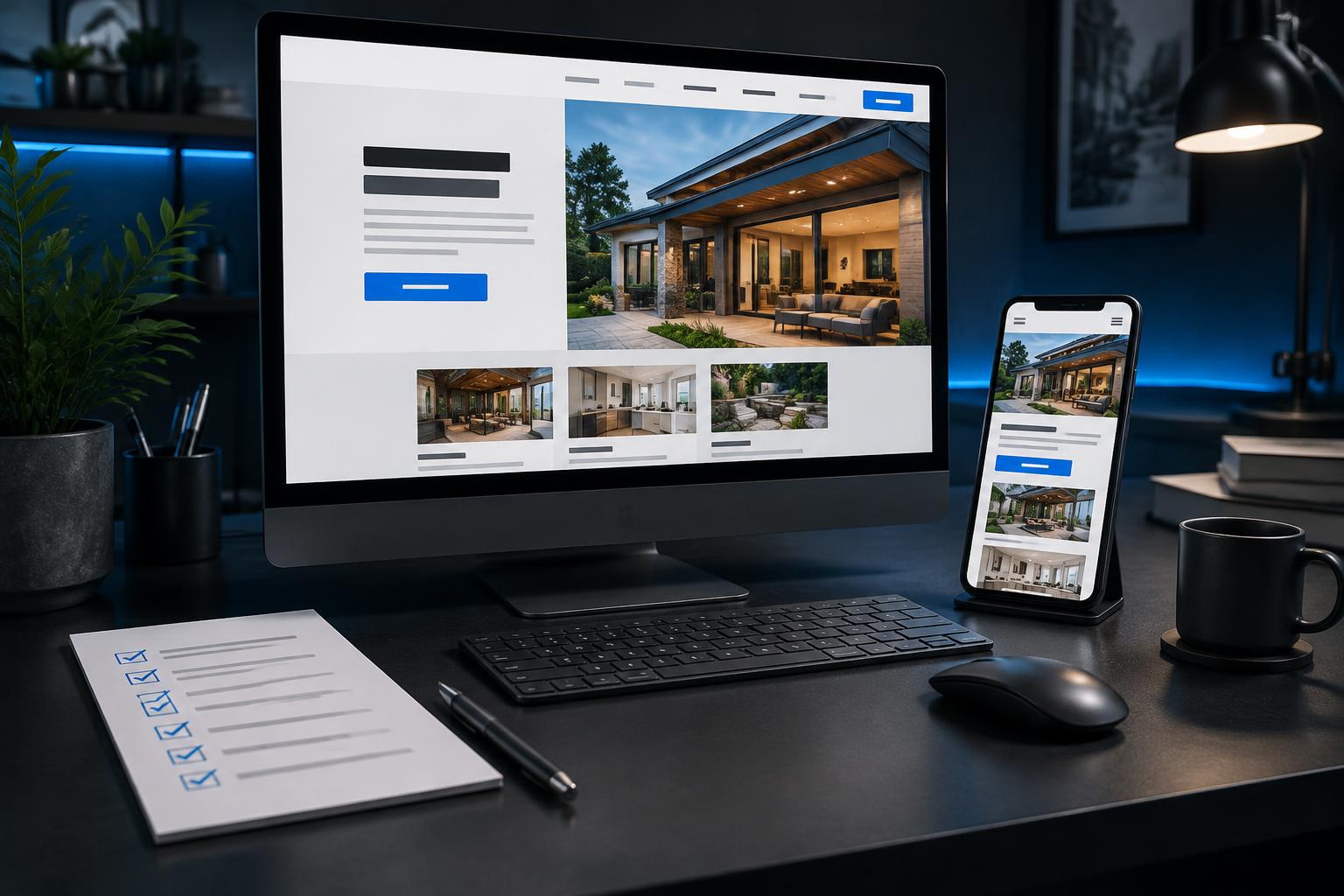
Landing Page vs Website: Which Generates More Leads for Small Businesses?

A small business preparing to run ads faces a deceptively simple decision: send people to the existing website, or build a dedicated landing page? A website can explain the whole business. A landing page can focus attention on one offer. Both can generate leads, and either can waste a marketing budget when the visitor's expectations, the page's message, and the follow-up process do not line up.
This guide compares the two in practical business terms: traffic source, buying intent, search visibility, trust, lead quality, cost, and measurement. It includes illustrative Miami service-business examples, a testing framework, and an implementation checklist. Examples are not Atomik Engine client results. There is no universal conversion-rate winner, and no promise that changing a page will produce a particular number of customers.
Quick answer: Does a landing page or a website generate more leads?
A dedicated landing page is usually the better starting point for a tightly targeted campaign promoting one service or offer. A full website is usually the stronger foundation for organic search, multiple services, brand research, and buyers who need more information before contacting you. Most established small businesses benefit from both: a credible website for discovery and evaluation, plus focused landing pages for specific campaigns. The winner should be measured by qualified leads and customer acquisition cost—not raw form submissions alone.
What is the difference between a landing page and a website?
A website is a collection of connected pages representing the business: a homepage, service pages, company information, contact details, resources, and sometimes booking or checkout. Visitors can choose different paths depending on what they need. A campaign landing page is a page built around a defined audience, offer, and next step, such as requesting an estimate or booking a consultation.
There is an important terminology wrinkle. In analytics, any page where a visit begins is a landing page. Google Ads also calls the destination after an ad click a landing page. When marketers compare 'landing page vs website,' they usually mean a focused campaign page versus the broader company website. A landing page can live inside the same website; it does not need a separate domain, platform, or brand.
The comparison at a glance
- Main purpose: a campaign landing page advances one offer; a full website supports discovery, evaluation, and multiple customer journeys.
- Traffic fit: focused pages suit targeted ads, email links, and specific promotions; websites support branded, organic, referral, and multi-service traffic.
- Navigation: campaign pages prioritize the main action while preserving necessary trust and policy links; websites let people explore services and company information.
- Search opportunity: one useful landing page can rank for a specific need; a website can cover more distinct topics with connected, substantive pages.
- Lead qualification: either format can qualify prospects through clear scope, service area, appropriate questions, and accurate expectations.
- Measurement: compare qualified inquiries, booked conversations, customers, and acquisition costs—not design preference or the number of pages.
When a dedicated landing page is the better lead-generation choice
1. Your advertisement promises a specific service
Someone who clicks an ad for 'Miami emergency plumbing' should not have to search through a homepage that equally promotes remodeling, maintenance, and commercial installations. A focused page can immediately confirm the advertised service, explain where it is available, and present the appropriate contact action. That continuity between ad and destination is often called message match.
Google identifies landing page experience as one of the diagnostic components of Quality Score, alongside expected clickthrough rate and ad relevance. Quality Score itself is not an input to the ad auction. Use its components to investigate relevance problems rather than treating a score as a direct price formula. A focused page helps only if it actually answers the searcher's need.
2. You are testing one offer
A campaign page gives a new offer its own message and measurement path without forcing a rewrite of the whole website. A contractor might test a renovation consultation; a professional-services firm might offer an initial assessment. Describe what the visitor receives, what is excluded, who qualifies, and what happens after the request. Do not label an offer 'free' if payment or a purchase commitment is required but hidden.
3. The visitor has one immediate decision
When a prospect already knows the service they want, a page that makes them choose among unrelated offerings can introduce friction. A focused page can show the answer, relevant proof, key objections, and a request form in a coherent sequence. Focus does not mean removing all information. Expensive or sensitive purchases may need a longer explanation before a visitor is comfortable sharing details.
4. You need a clearer campaign experiment
A dedicated URL makes it easier to connect a campaign with a particular offer and page version. It can help isolate problems: relevant clicks but no form starts suggest a messaging or trust issue; many starts but few submissions suggest friction or a technical failure; many submissions but few qualified leads suggest audience or qualification problems. The page is one variable, not the whole acquisition system.
When a full website is the better investment
1. Customers need to compare several services
A small law firm offering business counsel, estate planning, and litigation has several different buyer journeys. A single page cannot comfortably answer every question at the right level of detail. A clear website can provide a distinct page for each service, relevant company information, and an easy path to contact. Visitors coming through referrals also commonly want to verify the company before committing.
2. You want durable organic and local search visibility
A website creates space for substantive service pages, accurate service-area information, case studies with permission, and useful answers to buyer questions. These pages can address distinct search intents and link to one another. More pages alone do not improve rankings: thin city-name variations and repeated generic text can add clutter without helping customers. Prioritize useful coverage over page count.
For Miami businesses, publish accurate information about services offered in Miami and relevant surrounding areas. Make the business identity consistent with legitimate business listings. Do not invent a storefront address or create profiles for locations where the business is not eligible. Local relevance comes from truthful service information and real business evidence, not simply repeating 'Miami, FL' throughout a page.
3. Buyers need substantial trust evidence
For a high-value project, visitors may research the team, process, examples of work, scope, and policies before they inquire. A full website can support that evaluation without trying to squeeze everything into one sales page. Nielsen Norman Group's B2B usability research emphasizes answering customers' actual information needs rather than organizing the experience around internal company priorities.
4. You need a reusable business foundation
A sound website can support hiring, partnerships, customer resources, new service launches, booking, and payments as the business evolves. A short campaign page is not necessarily a replacement for those functions. Conversely, a company website does not automatically justify sending every advertisement to its homepage. Build the foundation and then choose the appropriate destination for each audience.
The strongest approach is often a website plus focused campaign pages
Think of the website as the business's information system and a landing page as a focused entrance into it. A Miami contractor could have a company homepage, renovation service pages, real project examples, and a contact page. A bathroom-remodeling advertisement could lead to a focused page about that specific service, using matching language and a relevant estimate form.
Keep campaign pages on your primary domain when practical. Use consistent branding, accurate contact information, and accessible links to privacy and other necessary policies. Whether to include broad navigation depends on the visitor's needs and the campaign, not a rule that every landing page must hide the menu. Google has emphasized helping ad visitors reach expected information and navigate when a destination does not immediately answer their need.
What a high-converting small-business landing page should contain
A specific promise and a clear next step
The opening should state the service or offer, who it is for, and any relevant location or eligibility. The primary button should describe the action: 'Request a remodeling estimate' is clearer than 'Discover more.' Match the promise to what the business can actually deliver. Avoid unsupported guarantees, artificial countdowns, or claims about results that you cannot substantiate.
Evidence appropriate to the decision
Use real project photos, permissioned reviews, accurate credentials, team information, or a transparent description of the process. If there are no client case studies yet, label demonstrations as examples rather than implying they are paid client outcomes. Evidence should address the buyer's uncertainty: whether you understand their problem, serve their area, and can handle the scope.
Answers to the objections that stop inquiries
Explain what is included, how pricing is determined, what the next conversation covers, and any constraints on availability or service area. A dentist's page may need accurate information about appointment types and payment options. A contractor's page may need project-fit criteria. Only publish insurance acceptance, financing, turnaround, and other business facts when verified.
A form that earns its requested information
Ask for the information needed for the next step, not everything you might eventually want. An email address may be sufficient for a resource subscription; an estimate request may need a name and project type. If you collect a phone number, explain the intended contact clearly and obtain appropriate consent for any messaging you plan to send. A submission is not blanket permission for automated marketing texts.
The form must validate entries, preserve information after errors, save successful requests, and notify the appropriate person. The visitor should receive a truthful confirmation. Test the whole journey, including the stored request and notification, rather than accepting a button animation as evidence that delivery works.
Mobile performance and accessibility
Keep text readable, inputs labeled, keyboard focus visible, and buttons easy to activate. A page that loads quickly but has an inaccessible form still loses potential customers. Core Web Vitals measure loading, responsiveness, and visual stability; they are useful diagnostics, not a guarantee of rankings or conversions. Optimize the actual conversion path, especially on phones.
Landing pages, SEO, GEO, and AEO: What changes for AI search?
SEO helps search engines discover, understand, and rank content. GEO is commonly used for visibility in generative answers; AEO emphasizes answering questions in formats answer systems can use. These overlap. Clear services, credible evidence, readable answers, sound technical access, and accurate business details matter across traditional and AI-assisted discovery.
Google says that its AI search features do not require special AI-only markup or files. Pages need to be indexed and eligible to appear with a snippet to be supporting links, and ordinary SEO practices remain relevant. Structured data should match visible content. Do not add invented reviews, prices, or outcomes to markup in the hope of gaining an AI citation.
A full website usually offers more opportunities to answer distinct customer questions than one campaign page. A focused landing page can still contain useful, indexable information about a particular offer. If a page is intentionally excluded from search—for example, a temporary ad experiment—do not expect that page to contribute to organic discovery. Robots access, noindex directives, canonical choices, and internal links serve different purposes; check the intended behavior instead of copying a generic setup.
AI-readable Markdown can make the same content easier to retrieve in some workflows, but it is not a ranking factor or a guarantee of visibility. Keep it synchronized with the public page rather than creating contradictory summaries. OpenAI also distinguishes its search crawler from its model-training crawler; business owners should review these choices according to their visibility and content-use preferences.
How to compare lead generation without fooling yourself
Measure the whole funnel
Track visits, valid inquiries, qualified inquiries, booked conversations, and new customers. Agree on a definition of 'qualified' before running a campaign: the prospect needs the service, is in an appropriate area, and meets relevant project-fit criteria. Exclude spam and duplicate submissions. A page that generates more low-quality requests can increase sales workload without increasing revenue.
- Inquiry conversion rate = valid inquiries divided by relevant visits, multiplied by 100.
- Qualified-lead rate = qualified inquiries divided by relevant visits, multiplied by 100.
- Cost per qualified lead = campaign cost divided by qualified inquiries.
- Customer acquisition cost = acquisition costs divided by new customers attributable to the campaign; define which costs and period are included.
An illustrative example—not a benchmark
Suppose two campaigns each cost $1,000 and receive 500 visits. A website service page produces 20 inquiries, of which 12 are qualified. A campaign landing page produces 35 inquiries, of which 10 are qualified. The landing page has the higher inquiry conversion rate: 7% versus 4%. But the website page has the lower cost per qualified lead: about $83.33 versus $100. Which is better ultimately depends on booked appointments, customers, and profit. These figures are invented solely to explain the calculation.
Run a fair test
Compare visitors from the same channel, audience, offer, and time period. Organic visitors researching a service are not directly comparable with people clicking a social ad for a promotion. If feasible, randomly divide comparable campaign traffic between the destinations, change one major variable at a time, and choose the success metric in advance. Keep follow-up consistent so a staffing change does not masquerade as a page improvement.
Low-volume businesses may not have enough data for a statistically reliable A/B test in a short period. Do not declare a winner after a handful of leads or stop the test the moment a preferred version leads. Use qualified-lead patterns, customer feedback, and technical diagnostics while acknowledging uncertainty. Respect tracking consent; measurement gaps are better than silently loading optional trackers against a visitor's choice.
Miami small-business examples: Which approach fits?
Contractor or home-services company
Use the website to explain service categories, project fit, genuine work examples, and accurate service areas. Send a narrowly targeted remodeling ad to a corresponding estimate page. Distinguish major renovation inquiries from minor repair requests if the business handles only one. A broad homepage is a poor substitute for a clear project-fit conversation.
Dental practice or medical office
Use a trustworthy website for practice information, credentials, and verified service details. A campaign page can support one appointment type, but should not make unsupported health claims or collect unnecessary sensitive medical information in a general marketing form. Advertising, privacy, and professional rules need review appropriate to the practice; a generic landing-page template does not establish compliance.
Law firm or professional-services business
Provide sufficient website depth for clients to understand practice areas, experience, and next steps. A consultation page can focus on a defined matter type while preserving necessary disclosures. Follow applicable professional advertising rules and do not imply guaranteed legal or financial outcomes. Complex buyers often need more reassurance than a short form and a slogan.
Small company launching its first campaign
If the existing website accurately represents the business and works on mobile, start by improving the most relevant service page or building one focused campaign destination. If the website is outdated, confusing, or broken, repair the foundation first. Adding paid traffic to a failed inquiry process increases spending without solving the underlying problem.
What should you build first if your budget is limited?
Start with the business constraint rather than the page format. If people cannot verify who you are or what you do, a credible website is the priority. If your website already does that well and you have one clear offer to advertise, a focused landing page may be the next useful investment. If inquiries already arrive but follow-up fails, fix lead handling before redesigning either destination.
Request a scope that separates strategy, copy, design, implementation, tracking, integrations, ongoing edits, and ad management. A page count does not tell you whether the system is complete. Consider ownership and maintenance too: who can change the offer, whether requests are stored, what happens when email delivery fails, and who checks forms after updates. Evaluate proposals against a functioning customer journey, not a promised conversion percentage.
A practical 30-day implementation plan
- Week 1: Choose one audience and offer. Verify the current inquiry path, define qualified leads, collect genuine proof, and record baseline acquisition costs where available.
- Week 2: Improve the relevant service page or create a focused campaign page. Match the ad promise, answer objections, and connect the form to storage and owner notifications.
- Week 3: Test on mobile and with a keyboard. Confirm submissions, notifications, consent behavior, and follow-up. Launch a controlled campaign only after these checks pass.
- Week 4: Review qualified leads and sales conversations. Fix the largest observed bottleneck and continue measurement; do not treat a small first-month sample as definitive proof.
Frequently asked questions
Can a landing page replace my business website?
It can provide a temporary presence for one simple offer, but it is usually not a complete replacement when customers need multiple services, company details, resources, or deeper trust information. A small, well-organized website with one campaign page is often more useful than a single overloaded page.
Should I send Google Ads traffic to my homepage?
Only when the homepage directly meets the advertised intent. For a specific service or offer, use the most relevant service page or campaign page. The destination should make the promised information and next action easy to find without hiding necessary business details.
Can a landing page rank on Google or appear in AI answers?
Yes, a useful page can be eligible when crawlers can access it and indexing settings allow it. Neither a landing-page label nor special AI wording guarantees a ranking or citation. Content quality, relevance, credibility, technical eligibility, and search-system decisions all matter.
Should a landing page have navigation?
Use navigation appropriate to the task. Keep the primary conversion path clear, but preserve access to necessary information and policies. Removing every link is not a universal best practice, especially when visitors need to evaluate a complex business or recover from an unexpected destination.
How many landing pages does a small business need?
Create distinct pages when the audience, service, offer, or decision materially differs. Do not create one for every keyword variation. Begin with the highest-priority campaign and expand only when the pages provide genuinely different information and can be maintained.
Which metric decides whether the investment worked?
Qualified leads, customers, acquisition cost, and profitability are more useful than form volume alone. A high-converting page can still attract unsuitable inquiries, and a lower-volume page can produce better customers. Evaluate the sales outcome as well as the click-to-form journey.
Final verdict: Use the right page for the right buyer
A landing page is a focused conversion tool. A website is a broader discovery and trust foundation. Small businesses usually need a credible foundation and a relevant destination for each important campaign—not a debate about which format always wins. Start with buyer intent, deliver the promised information, make contacting you work reliably, and judge the result by qualified opportunities and paying customers.
Atomik Engine Services
Atomik Engine is built in Miami and serves companies everywhere. Our three connected service categories—Web Development, Growth, and AI & Automation—support the journey from discovery to inquiry to follow-up. We help businesses plan credible websites, focused campaign pages, SEO and AI search optimization, and practical lead-handling systems. Scope and pricing depend on the project; rankings, AI citations, and lead volumes are not guaranteed.
- Web Development: business websites and conversion-focused page experiences
- Growth: SEO, digital marketing, content, and AI search optimization
- SEO + AI Search Optimization: GEO and AEO foundations
- AI & Automation: chat, agents, and connected business workflows
- View Atomik Engine packages and pricing
- Request a Free Website Audit
- Discuss your website or landing-page project
Atomik Engine Services
Engineered growth, end to end.
We ship the systems behind everything in this article — websites, SEO/GEO, and AI automation — on a modern edge stack with fixed scope and transparent pricing.
Ready to build?