How a New Website Can 10X Your Sales: The 2026 ROI Playbook

Most business owners think of a website as a brochure expense. It is closer to a salesperson that works every hour of every day, never calls in sick, and talks to every single person who hears about your company. When that salesperson is slow, confusing, or invisible in search, you lose revenue you never see on a report — because the visitor simply leaves and calls a competitor.
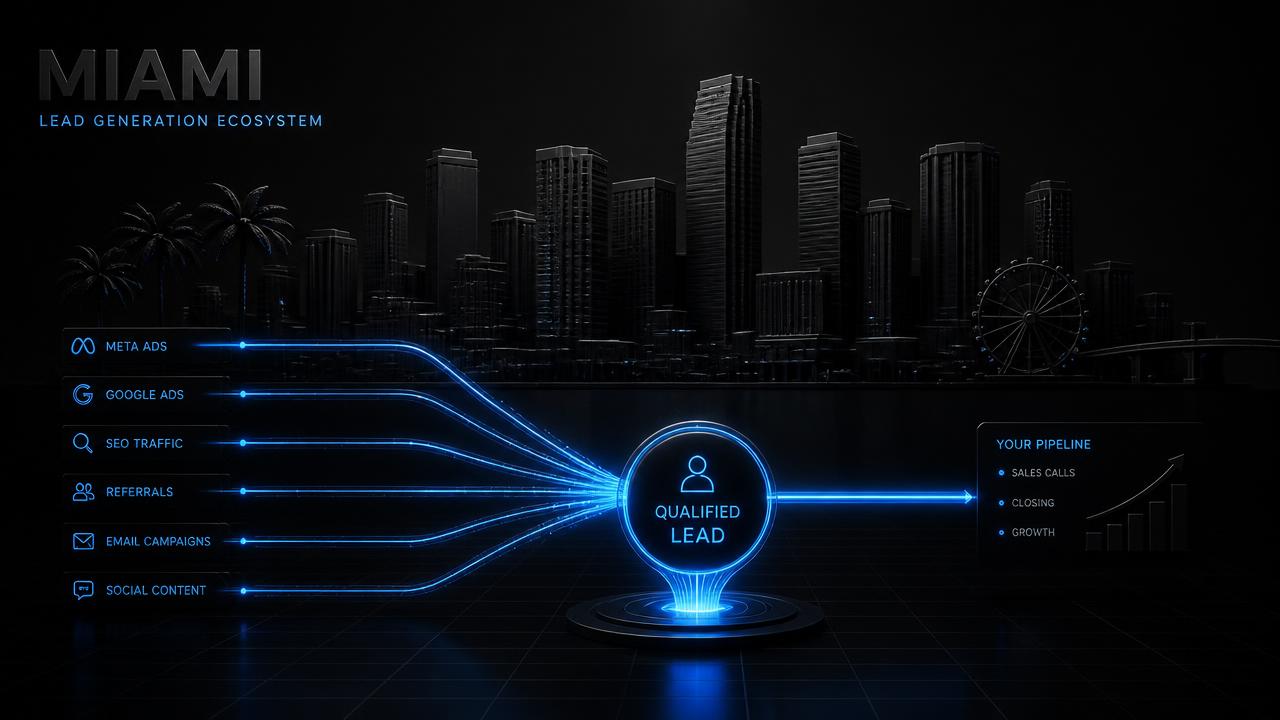
A new website can multiply sales, and "10X" is not marketing hyperbole when you understand the math. Revenue from a website is a chain of multipliers: traffic times conversion rate times close rate times average deal value. Improve each link by a moderate amount and the product compounds fast. Doubling traffic, tripling conversion rate, and lifting average deal value by 60 percent produces roughly ten times the revenue — and none of those individual improvements is extraordinary.
This guide explains exactly how that compounding works, which upgrades actually move revenue, what a realistic timeline looks like, how to measure return honestly, and where Atomik Engine fits if you want it built rather than managed yourself.
Quick answer: Can a new website really 10X sales?
Yes — but not from design alone. A new website multiplies sales when it improves several revenue levers at once: more qualified traffic from search and AI answer engines, a higher percentage of visitors who contact you, faster page speed so fewer people leave, clearer positioning so better-fit buyers self-select, and automated follow-up so fewer leads go cold. Each lever is a multiplier, not an addition. Businesses replacing an outdated, slow, or template site typically see the largest gains because the starting baseline is low.
- Traffic: technical SEO, service pages, local relevance, and AI-readable content expand how many people find you.
- Conversion: clear offers, trust signals, fast load, and frictionless forms raise the share of visitors who act.
- Lead quality: qualification fields and honest pricing filter out poor-fit inquiries before they consume sales time.
- Speed to response: automated routing and notifications get you to the lead first, which strongly influences who wins the deal.
- Deal value: better presentation, proof, and packaging support higher prices without discounting.
The compounding math behind 10X
Consider a service business with a dated website. It receives 1,000 visitors per month, converts 1 percent into inquiries, closes 20 percent of those, and averages $2,000 per project. That is 10 leads, 2 clients, and $4,000 per month.
Now improve each lever moderately over twelve months. Traffic grows to 2,500 per month through technical SEO, real service pages, and AI search visibility. Conversion rises to 3 percent — well within normal range for a focused, fast, trust-heavy site. Close rate rises to 28 percent because leads arrive better qualified and get a faster response. Average project value rises to $2,600 because the site presents higher-tier packages credibly.
The result is 75 leads, 21 clients, and roughly $54,600 per month. That is more than a 13X increase in revenue, and no single input required a miracle. This is the central insight: you do not need one heroic improvement. You need four or five ordinary improvements that multiply.
Why bad websites hide their cost
The cost of a weak website is invisible because it shows up as absence. There is no notification when a visitor gives up on a form, no alert when a mobile page takes six seconds to load, and no report when an AI assistant cannot find your services and recommends someone else. Owners judge the site by how it looks to them, not by what it fails to capture. Analytics, session data, and conversion tracking are what make that loss visible — which is why measurement belongs in the build, not after it.
Ten upgrades that actually move revenue
1. Speed on real mobile connections
Page speed is a revenue variable. Visitors abandon slow pages, and search engines factor Core Web Vitals into rankings. Test on a mid-range phone on cellular data, not a desktop on office Wi-Fi. Target a Largest Contentful Paint under 2.5 seconds, minimal layout shift, and responsive interaction. Modern edge-rendered sites, compressed and correctly sized images, and the removal of unnecessary plugin layers usually produce the largest gains.
2. A homepage that states the offer in five seconds
A visitor should immediately understand what you do, who you serve, where you operate, why you are credible, and what to do next. Vague slogans lose money. Specific positioning — the service, the market, the outcome — lets the right buyer self-identify and the wrong one leave without consuming sales time.
3. Individual service pages instead of one list
One page listing every service ranks for nothing and converts poorly. A dedicated page per service can address that buyer's specific questions, objections, pricing expectations, process, and proof — and can rank for that service's searches. This single change often accounts for most of the traffic increase after a rebuild.
4. Transparent pricing or clear pricing ranges
Hiding all pricing does not protect margin; it filters out serious buyers and attracts tire-kickers. Published packages, starting prices, or honest ranges increase conversion quality dramatically. Buyers who arrive already comfortable with the investment close faster and negotiate less.
5. Trust signals placed where doubt appears
Credentials, guarantees, process transparency, team presence, service areas, and real project detail reduce perceived risk. Place them next to the moment of hesitation — beside the price, beside the form, beside the commitment — rather than collecting them on a page nobody visits.
6. Forms designed for completion, not data collection
Every additional required field reduces submissions. Ask for what you genuinely need to respond well: name, contact method, service needed, and a short description. Collect the rest during the call. Validate inline, confirm on screen, and send an immediate acknowledgment email so the lead knows they were heard.
7. Technical SEO that lets search engines understand you
Descriptive titles, useful meta descriptions, one canonical URL per page, a current sitemap, sensible robots rules, structured headings, internal links, image alternatives, and relevant schema. None of this is glamorous, and all of it determines whether your content is eligible to rank at all.
8. GEO so AI assistants can cite you
A growing share of buyers now ask ChatGPT, Gemini, Perplexity, Copilot, or Google AI Overviews for recommendations. Generative Engine Optimization makes your business retrievable and citable: concise direct answers near the top of pages, factual service and pricing detail, FAQs, schema, clear entity information, and machine-readable content. No provider can guarantee a citation from an independent platform, but you can remove the barriers that make citation unlikely.
9. Analytics and conversion tracking from day one
You cannot improve what you cannot see. Track page views, scroll depth, form starts, form completions, call clicks, and the source of each conversion. Within 60 days this data tells you which pages earn revenue and which need work — turning the website from a fixed asset into a system you tune.
10. Automated follow-up and AI assistance
Speed of response is one of the strongest predictors of winning a deal. Automatic routing to the right person, instant acknowledgment to the customer, CRM entry without manual typing, and an AI assistant that answers common questions after hours all convert existing traffic into more closed business without spending another dollar on marketing.
Redesign versus rebuild: which one 10Xes
A refresh — new colors, new photos, rewritten copy on the same platform — helps when the foundation is sound, the site is already fast, pages are indexed, and forms work reliably. It is cheaper and quicker, and it can lift conversion.
A rebuild is the right call when the site is slow and cannot be fixed without replatforming, when the structure has no real service pages, when mobile behavior is broken, when the platform is insecure or unsupported, or when analytics and integrations were never implemented. Rebuilds produce the dramatic multiples precisely because they fix several levers simultaneously.
A practical test: list the five levers above and mark which ones your current site fails. Fail one or two, refresh. Fail three or more, rebuild.
Realistic timeline to results
- Weeks 0–1: discovery, positioning, page architecture, content plan, and design direction.
- Weeks 1–2: build, content, forms, analytics, schema, and technical SEO foundations. Atomik Engine ships most business sites in under seven days once content is supplied.
- Weeks 2–6: indexing, early ranking movement, first conversion data, and quick optimization passes.
- Months 2–4: service pages gain traction, conversion rate improvements become measurable, and follow-up automation compounds.
- Months 4–12: content depth, authority signals, and AI visibility drive the traffic multiple that completes the compounding effect.
Conversion improvements appear fastest because they apply to traffic you already have. Traffic improvements take longer because search engines need time to crawl, index, and trust new content.
How to measure ROI honestly
Calculate return as incremental revenue divided by total investment. Track the baseline before launch: monthly visitors, inquiries, close rate, and average deal value. After launch, compare the same four numbers.
A $2,500 website that adds two clients per month at $2,600 average value returns its cost in the first month and produces roughly $62,000 in additional annual revenue. That framing — not aesthetics — is how the decision should be made.
Be honest about attribution. Seasonality, referrals, and advertising all influence results. Server-side conversion tracking with source data keeps the picture accurate rather than flattering.
Atomik Engine services
Atomik Engine builds the entire revenue system, not just the pages. Based in Miami and serving clients nationwide, we design, develop, optimize, and automate business websites on a modern edge stack with fixed scope and published pricing.
Website design and development
- Business Website — $1,000: up to three custom pages, contact form, analytics, SEO foundation, edge deployment, one revision round.
- Professional Website — $2,500: up to six custom pages, bespoke visual system, deeper content structure, two revision rounds, 30 days of post-launch support.
- Performance Website — $5,000: expanded page count, advanced conversion architecture, integrations, performance tuning, and extended support.
- Enterprise Website — $10,000+: complex platforms, authenticated areas, multi-brand systems, and custom integrations.
Digital marketing, SEO, and GEO
Ongoing technical SEO, local visibility, content production, structured data, and Generative Engine Optimization so your business is discoverable in Google, Bing, and AI answer engines. Advertising budget is billed separately from management.
AI development and automation
AI packages start at $5,000 and scale to $10,000, $20,000, and $50,000+ for enterprise platforms. Common builds include website assistants grounded in your approved content, lead qualification and routing, CRM and calendar automation, private knowledge search, document workflows, and voice agents. Model, API, and applicable hosting usage are billed separately.
Frequently asked questions
How much does a new business website cost?
Atomik Engine website projects start at $1,000 for a focused three-page business site, $2,500 for a full professional marketing site, $5,000 for a performance build, and $10,000+ for enterprise platforms. Pricing is published so you can evaluate the investment before a call.
How long before a new website increases sales?
Conversion gains often appear within the first 30 days because they apply to existing traffic. Traffic-driven growth typically becomes measurable between months two and four and compounds through the first year as content and authority build.
Will a new website help me show up in ChatGPT and AI search?
It can. Clear structure, factual service and pricing content, schema, direct answers, and machine-readable pages make a business easier for answer engines to retrieve and cite. No agency can guarantee placement on an independent AI platform.
Do I need to write the content myself?
Entry-level packages assume client-provided copy and images. Higher tiers and marketing engagements include content production, so you can hand over the subject expertise and let us write and structure it.
What if my current site just needs updating?
If your site is fast, indexed, mobile-friendly, and converting, a refresh is the better investment. If it fails three or more of those, a rebuild will produce far better returns than patching.
Do you work outside Miami?
Yes. Atomik Engine is based in Miami, Florida, and works with clients across the United States.
The bottom line
A new website multiplies sales when it improves traffic, conversion, lead quality, response speed, and deal value at the same time. The gains are ordinary individually and extraordinary together. Start by measuring your current four numbers, identify which levers are failing, and rebuild around them — then let the compounding do the work.
Atomik Engine Services
Engineered growth, end to end.
We ship the systems behind everything in this article — websites, SEO/GEO, and AI automation — on a modern edge stack with fixed scope and transparent pricing.
Ready to build?